


TODAY IN SCIENCE HISTORY
NEWSLETTER • 3 SEPTEMBER
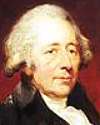
On 3 Sep 1728 (on the old Julian calendar), Matthew Boulton was born. He inherited a flourishing manufacturing business from his father, which he continued to develop. Although he is best-known for the support he gave to James Watt to introduce steam engines that powered the Industrial Revolution, Boulton also maintained his original business producing buttons, buckles and other decorative goods of silver and or mulu (a sort of gilded bronze). He also expanded into the production of coins using steam-powered presses. It is this variety of business activities that are related in an obituary published in The Monthly Magazine when he died in 1809—An Account of the Late Matthew Boulton, Esq. You may find it interesting to find that Boulton had more activities by which he was known in his own time, than his involvement in the manufacture and distribution of steam engines for which he is now remembered.

On 3 Sep 1728, Matthew Boulton was born. He inheriting his father's silver-stamping business for producing buttons and buckles. But that was just his introduction to becoming an astute businessman and industrialist. His greatest accomplishments came when he went into partnership, developing a market for James Watt's steam engines. Boulton & Watt steam engines were exported all over the world. Today's book pick is: Matthew Boulton: Selling What All the World Desires, by editor Shena Mason, who brings together other aspects of Boulton's extraordinarily varied achievements. Boulton's magnificent ormolu ornaments decorated aristocratic drawing rooms. His determination to discourage counterfeiters led to a contract to manufacture British coinage and coins of other countries at his mint. Boulton was leader of the campaign to establish the Birmingham Assay Office (still the busiest in the country), and he was also at the heart of the Lunar Society, a group of prominent industrialists, natural philosophers, and intellectuals interested in scientific and social change. Known to Ben Franklin, Thomas Jefferson, Erasmus Darwin, Josiah Wedgwood, and many others, Boulton was a fascinating man, Britain’s leading Enlightenment entrepreneur. This book was published for the bicentenary of his death, and provides an engaging survey of a remarkable life.
It is available from Amazon, typically about New from $22.49. Used from $22.00. (As of earlier time of writing - subject to change.)
| | I sell here, Sir, what all the world desires to have—POWER. About the improved steam engine invented by James Watt and brought into production at Boulton’s manufactory. — Matthew Boulton, British engineer and manufacturer (born 3 Sep 1728).  |
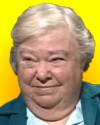 | A nuclear power plant is infinitely safer than eating, because 300 people choke to death on food every year. (1977) — Dixy Lee Ray, American marine biologist (born 3 Sep 1914). |
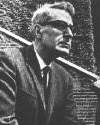 | If there is magic on this planet, it is contained in water. — Loren Eiseley, American anthropologist and ecologist (born 3 Sep 1907). |
| Before you look at today's web page, see if you can answer some of these questions about the events that happened on this day. Some of the names are very familiar. Others will likely stump you. Tickle your curiosity with these questions, then check your answers on today's web page. | |
| Births | |
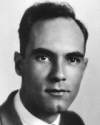 | Carl David Anderson, born 3 Sep 1905, won the Nobel Prize for Physics in 1936 for his discovery of a new atomic particle. He examined the photographs of cosmic rays taken as they passed through a Wilson cloud chamber in a strong magnetic field. What was this particle? |
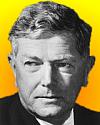 | On 3 Sep 1899, Sir Frank Macfarlane Burnet was an Australian physician and virologist, who shared the 1960 Nobel Prize for Physiology or Medicine for the discovery of acquired immunological tolerance to tissue transplants. He made pioneering use of a certain host material for virus multiplication. What did Burnet pioneer as the host medium for virus multiplication in his research. |
| Deaths | |
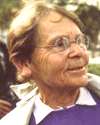 | Barbara McClintock (1902-1992) was an American scientist regarded as one of the most important figures in the history of genetics. In the 1940s and 1950s McClintock's work on cytogenetics led her to theorize that genes are transposable - they can move around - on and between chromosomes. She was awarded the Nobel Prize in Physiology or Medicine in 1983, the first American woman to win an unshared Nobel. What plant was the subject of this research? |
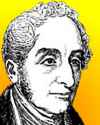 | On 3 Sep 1854, Henry Fourdrinier died, an English inventor who co-invented paper-making machinery with his brother, Sealy. Together, they spent a spent a fortune over their lifetimes not only in perfecting the machine, but also on costly legal battles to defend their patents. They died without any substantial return on their investment, but did obtain a small grant of compensation from Parliament. Paper-making machinery today still uses the production process known by their name. What was the distinctive innovation the Fourdriniers introduced to paper-making? |
| Events | |
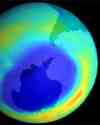 | On 3 Sep 2000, NASA data showed the Antarctic ozone hole at just under 11 million square miles - the biggest it had ever been. Record-low temperatures in the stratosphere are believed to have helped the expansion of the ozone hole during the Antarctic spring season. By 9 Sep 2000, the hole had grown over another country. What was the other country? |
 | On 3 Sep 1996, Slowinski and Gage discovered the number 2^1257787-1, the 34th of its kind. What was special about this number? |
Fast answers for the previous newsletter for September 2: teacher • isotope (“same place” - on the Periodic Table) • ...to the pressure of the gas above the liquid, provided that no chemical action occurs. • Titanic • 14 September.
 If you enjoy this newsletter, the website, or wish to offer encouragement or ideas, please send feedback by using your mail reader Reply button.
Your click on a Facebook, StumbleUpon, or other social button on the site webpages is also a welcome sign of appreciation. Thank you for using them.
© This newsletter is copyright 2020 by todayinsci.com. Please respect the Webmaster's wishes and do not put copies online of the Newsletter — or any Today in Science History webpage. (If you already have done so, please remove them. Thank you.) Offline use in education is encouraged such as a printout on a bulletin board, or projected for classroom viewing. Online, descriptive links to our pages are welcomed, as these will provide a reader with the most recent revisions, additions and/or corrections of a webpage. For any other copyright questions, please contact the Webmaster by using your mail reader Reply button.
--
If you do not want to receive any more newsletters, Unsubscribe
To update your preferences and to unsubscribe visit this link


Thursday
Newsletter for Thursday 2 September.
TODAY IN SCIENCE HISTORY
NEWSLETTER • 2 SEPTEMBER
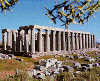
On 2 Sep 1814 Ernst Curtius was born, the German archaeologist and historian who directed the excavation of Olympia (1875-81), the most opulent and sacred religious shrine of ancient Greece and site of the original Olympic Games (from 776 B.C. to 393 A.D.).
When Curtius died in 1896, Robert F. Keep wrote in The Nation his reminiscences about the archaeolgist. Among the biographical notes, perhaps the most interesting is the chain of events whereby Curtius became the Educator of the Crown Prince, and how that relationship with the Royal Family instigated support for the German excavations in 1876-80. The remainder of the article on Ernst Curtius concentrates on the personal side of his life, but still makes an interesting read to think of the human side of an archaeologist rather than a catalog of his discoveries.

On 2 Sep 1877, Frederick Soddy was born, who coined the word “isotopes” to refer to the seperate species of atoms of a given element that shared all the same chemical properties, yet had a different atomic mass. It was an outcome of his investigation of the different transformations of radioactive substances for which he received the Nobel Prize for Chemistry in 1921. Although the word he created is used extensively in science today, his own name remains obscure. To amend that... Today's book pick is: The World Made New: Frederick Soddy, Science, Politics, and Environment, by Linda Merricks who outlines the research of this most original and widely significant, yet largely forgotten British scientist. Soddy was one of the first generation of English atomic scientists, working with Ernest Rutherford on the initial discoveries about atomic disintegration. His concern with the potentially disasterous combination of politics and the abusive use of atomic energy led Soddy to his abandon scientific research. He should also be recognized as a pioneer in the field of energy conservation and environmental ethics. This book provides a fascinating read of one of the first proponents of scientific responsibility.
It is available from Amazon, typically about New from $130.00. Used from $28.00. (As of earlier time of writing - subject to change.)
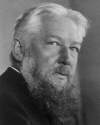 | At my urgent request the Curie laboratory, in which radium was discovered a short time ago, was shown to me. The Curies themselves were away travelling. It was a cross between a stable and a potato-cellar, and, if I had not seen the worktable with the chemical apparatus, I would have thought it a practical joke. Wilhelm Ostwald on seeing the Curie's laboratory facilities. — Wilhelm Ostwald, Russian-German physical chemist (born 2 Sep 1853). |
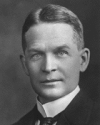 | The power of man to do work—one man-power—is, in its purely physical sense, now an insignificant accomplishment, and could only again justify his existence if other sources of power failed. … Curious persons in cloisteral seclusion are experimenting with new sources of energy, which, if ever harnessed, would make coal and oil as useless as oars and sails. If they fail in their quest, or are too late, so that coal and oil, everywhere sought for, are no longer found, and the only hope of men lay in their time-honoured traps to catch the sunlight, who doubts that galley-slaves and helots would reappear in the world once more? — Frederick Soddy, English chemist and physicist (born 2 Sep 1877). |
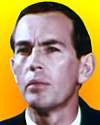 | It is infinitely better to transplant a heart than to bury it to be devoured by worms. — Christiaan Barnard, South African surgeon (died 2 Sep 2001). |
| Before you look at today's web page, see if you can answer some of these questions about the events that happened on this day. Some of the names are very familiar. Others will likely stump you. Tickle your curiosity with these questions, then check your answers on today's web page. | |
| Births | |
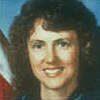 | Christa McAuliffe, born 2 Sep 1948, was a civilian astronaut on the 10th launch of the Challenger Space Shuttle, which exploded in midair, killing its crew of seven. What was her career? |
| | Frederick Soddy, born 2 Sep 1877, was an English chemist and physicist who received the Nobel Prize for Chemistry in 1921 for investigating radioactive substances. He coined the name now used for different species of atoms of the same element having a different atomic mass. What now ubiquitous name did Soddy provide for different species of atoms of the same element? What is the meaning of the Greek words he combined? To what do they refer? |
| Deaths | |
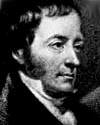 | William Henry (1775-1836) was an English physician and chemist, who proposed (1803) what is now called Henry's law, which refers to “The amount of a gas absorbed by a liquid is in proportion...” Can you complete this statement of Henry's Law? |
| Events | |
| | On 2 Sep 1985, it was announced that a U.S. and French expedition had located the wreckage of a sunken ship about 560 miles off Newfoundland, 73 years after the British luxury liner sank. What is the name of this vessel? |
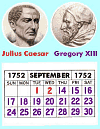 | The last day of the Julian calendar in Great Britain and the British colonies was 2 Sep 1752. The Gregorian Calendar designed to correct the extra leap year day problem went into effect the next day with tomorrow being numbered after dropping several days to realign the calendar. On the new calendar, what date followed 2 Sep 1752 on the old calendar? |
Fast answers for the previous newsletter for September 1: pernicious anemia • device that separates atoms or molecular fragments of different mass and measures those masses • pneumatic tube • subatomic particles having extremely short lifetimes and occurring only in high-energy nuclear collisions • passenger pigeon.
If you enjoy this newsletter, the website, or wish to offer encouragement or ideas, please send feedback by using your mail reader Reply button. Your click on a Facebook, StumbleUpon, or other social button on the site webpages is also a welcome sign of appreciation. Thank you for using them.
© This newsletter is copyright 2020 by todayinsci.com. Please respect the Webmaster's wishes and do not put copies online of the Newsletter — or any Today in Science History webpage. (If you already have done so, please remove them. Thank you.) Offline use in education is encouraged such as a printout on a bulletin board, or projected for classroom viewing. Online, descriptive links to our pages are welcomed, as these will provide a reader with the most recent revisions, additions and/or corrections of a webpage. For any other copyright questions, please contact the Webmaster by using your mail reader Reply button.
--
If you do not want to receive any more newsletters, Unsubscribe
To update your preferences and to unsubscribe visit this link


Wednesday
Newsletter for Wednesday 1 September.
TODAY IN SCIENCE HISTORY
NEWSLETTER • 1 SEPTEMBER
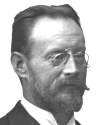
On 1 Sep 1858, Carl Auer was born, who was later created Freiherr (baron) von Welsbach. His invention of the incandescent gas mantle greatly improved the brightness of light that could be obtained from gas lamps. This was an important advance in a time before electric light dawned.
In this article from Illuminating Engineering, on The Work of Dr. Carl Auer von Welsbach in the Field of Artificial Illuminants, you'll find the story of an Austrian chemist who was working at his lab bench one day, researching spectra, when he found small beads of certain rare earths heated in a flame became white hot and incandescent. In a leap of intuition, he realized the potential for illumination. He experimented with soaking webbing with a mixture of suitable rare earth compounds, burning away the cotton framework, to create a mantle that became incandescent in a gas flame. He was eventually a manufacturer, distributing the mantles, or the fluids to make them, around the world.
For an interesting side-light in the story (pun!) you'll find mention of a variety of elements that you haven't seen discussed very often: lanthanum, zirconium, thorium and others. Worth a look to see how these rare earths had value in the nineteenth century in a commercial product.

On 1 Sep 1826, Alfred Ely Beach was born, who was an American inventor and publisher of Scientific American magazine which reported on technology developments and patents in the 19th-century.
Beach himself invented a tunneling shield, financed and secretly built an experimental subway which propelled a carriage by novel means. The tunnel was short, just one block, and operated as a demonstration (1870-73), with one station and train car. Even so, it was New York City's first subway when it was opened to the public. Today's book pick is: Secret Subway: The Fascinating Tale of an Amazing Feat of Engineering, by Martin W. Sandler who tells how the dream of this visionary engineer was crushed by the greed and political jockeying for power that characterized the city in the days of Boss Tweed and Tammany Hall. In the late 1860s New York was congested, a “bedlam on wheels,” yet Boss Tweed saw a threat to his power if the subway idea was extended.
This is a National Geographic Children's book for age 10 and up.
It is available from Amazon, typically about New from $13.34. Used from $1.89. (As of earlier time of writing - subject to change.)
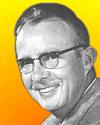 | There is no democracy in physics. We can’t say that some second-rate guy has as much right to opinion as Fermi. — Luis W. Alvarez, American physicist (died 1 Sep 1988). |
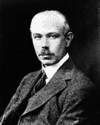 | Should the research worker of the future discover some means of releasing this [atomic] energy in a form which could be employed, the human race will have at its command powers beyond the dream of scientific fiction, but the remotest possibility must always be considered that the energy once liberated will be completely uncontrollable and by its intense violence detonate all neighbouring substances. In this event, the whole of the hydrogen on earth might be transformed at once and the success of the experiment published at large to the universe as a new star. — Francis William Aston, English chemist, physicist and chemist (born 1 Sep 1877). |
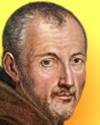 | The sciences have sworn among themselves an inviolable partnership; it is almost impossible to separate them, for they would rather suffer than be torn apart; and if anyone persists in doing so, he gets for his trouble only imperfect and confused fragments. Yet they do not arrive all together, but they hold each other by the hand so that they follow one another in a natural order which it is dangerous to change, because they refuse to enter in any other way where they are called. ... — Marin Mersenne, French mathematician, natural philosopher and theologian (died 1 Sep 1648). |
| Before you look at today's web page, see if you can answer some of these questions about the events that happened on this day. Some of the names are very familiar. Others will likely stump you. Tickle your curiosity with these questions, then check your answers on today's web page. | |
| Births | |
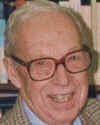 | Karl August Folkers, born 1 Sep 1906 was a U.S. chemist whose research on vitamins resulted in the isolation of vitamin B12, the only effective agent known in countering a certain medical problem. What is this medical problem? |
| | Francis William Aston, born 1 Sep 1877, was a British physicist who won the Nobel Prize for Chemistry in 1922 for his development of the mass spectrograph. What does the mass spectrograph do? |
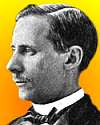 | Alfred Ely Beach, born 1 Sep 1826, was an American inventor and publisher, whose Scientific American helped stimulate 19th-century technological innovations and became one of the world's most prestigious science magazines. Beach himself invented a tunneling shield and built a subway (1870). What powered his subway carriages? |
| Deaths | |
| | Luis W. Alvarez (1911-1988) was an American experimental physicist who was awarded the Nobel Prize for Physics in 1968 for work that included the discovery of many resonance particles. What are resonance particles? |
| Events | |
| | On 1 Sep 1914, the Ectopistes migratorius became extinct as the last surviving bird of the native American species died at the Cincinnati Zoo. In the wild, it had been hunted to extinction; the fact that it traveled and nested in large flocks made it easy to slaughter. What is the common name of this often-quoted example of an extinct species? |
Fast answers for the previous newsletter for August 31: Jodrell Bank Experimental Station • law of the conservation of energy • inventions for the deaf • What was the industry he founded? • flight over water (Lake Erie) • cork.
If you enjoy this newsletter, the website, or wish to offer encouragement or ideas, please send feedback by using your mail reader Reply button. Your click on a Facebook, StumbleUpon, or other social button on the site webpages is also a welcome sign of appreciation. Thank you for using them.
© This newsletter is copyright 2020 by todayinsci.com. Please respect the Webmaster's wishes and do not put copies online of the Newsletter — or any Today in Science History webpage. (If you already have done so, please remove them. Thank you.) Offline use in education is encouraged such as a printout on a bulletin board, or projected for classroom viewing. Online, descriptive links to our pages are welcomed, as these will provide a reader with the most recent revisions, additions and/or corrections of a webpage. For any other copyright questions, please contact the Webmaster by using your mail reader Reply button.
--
If you do not want to receive any more newsletters, Unsubscribe
To update your preferences and to unsubscribe visit this link


Social Profiles


-
Why eels were once the perfect payment for land...
-
Last week, workers installing new gas pipes in the town of Chilca, 40 miles south of Lima, Peru, discovered a group of funerary bundles con...
-
 In 1896–1897 the forces of the Niger Coast Protectorate fought with the remnants of the Edo Empire. Following the defeat of an unsuccessful...