


TODAY IN SCIENCE HISTORY
NEWSLETTER • 28 AUGUST
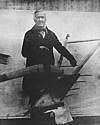
Stephen McCormick died on 28 Aug 1839, today, a second chance to familiarize yourself with his contribution to agriculture. (He was born on 26 Aug 1784.)
He was an American inventor and manufacturer of a practical cast iron plow with detachable components. His early achievement, while a youth, was to increase the productivity of a water-powered grist-mill by improving the shape of its nether millstone (the lower of the two millstones) used to grind flour. Though his father desired that he should make law his profession, he flatly refused. He was more interested by invention. By 1816, he had invented a cast-iron plough superior to Charles Newbold's earlier design. McCormick's first of several patents was issued on on 3 Feb 1819. His cast-iron mould board had an adjustable wrought-iron point mounted beneath, able to decrease the draft, while deepening the furrow, and breaking up the soil more effectively. Standardization of the replaceable parts led to the development of improved manufacturing processes.
For a larger picture of McCormick with one of his plows, and a few more biographical remarks, read this article on Stephen McCormick.
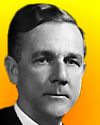
George Hoyt Whipple, born 28 Aug 1878, was an American physician and pathologist who shared the 1934 Nobel Prize for Physiology or Medicine with George R. Minot and William P. Murphy for “their discoveries of a treatment of pernicious anemia with a special diet of liver.” Whipple began a study in 1920 of the influence of food on blood regeneration. From experiments on dogs bled to reduce blood volume, he found the best food to stimulate the bone marrow for the production of the new red blood corpuscles was raw liver. Other foods, including kidney and apricots were also found helpful. Minot and Murphy applied Whipple's discovery of the value of liver. They designed a special diet for humans with a particular noninfectious disease - pernicious anemia. The three researchers made a major advance with a non-drug treatment of this condition. Today's book pick is: , by , which will give you some idea of what goes in to winning a Nobel Prize!
It is available from Amazon, typically about (As of earlier time of writing - subject to change.)
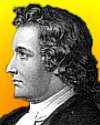 | Whether one show one's self a man of genius in science or compose a song, the only point is, whether the thought, the discovery, the deed, is living and can live on. — Johann Wolfgang von Goethe, German poet, zoologist, botanist and geologist (born 28 Aug 1749).  |
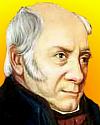 | Organized Fossils are to the naturalist as coins to the antiquary; they are the antiquities of the earth; and very distinctly show its gradual regular formation, with the various changes inhabitants in the watery element. — William Smith, English geologist and engineer (died 28 Aug 1839). |
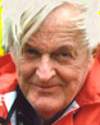 | Butterflies are very interesting. Here these things are little grubs for a while. And then they go into a little coffin. There they are in a sarcophagus, and then they come out and dance with the angels. — Roger Tory Peterson, American ornithologist, author and conservationist (born 28 Aug 1908). |
| Before you look at today's web page, see if you can answer some of these questions about the events that happened on this day. Some of the names are very familiar. Others will likely stump you. Tickle your curiosity with these questions, then check your answers on today's web page. | |
| Births | |
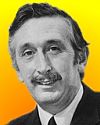 | Sir Godfrey Newbold Hounsfield, born 28 Aug 1919, was an English electrical engineer who shared the 1979 Nobel Prize for Physiology or Medicine for developing CAT, a high-resolution x-ray picture of an imaginary slice through the body (or head) is built up from information taken from detectors rotating around the patient. CAT is an acronym; what is its name in full? |
| | Roger Tory Peterson, born 28 Aug 1908, was an American author of field guides, and did much in the United States and Europe to stimulate public interest in his topic. What was his field of interest? |
| Deaths | |
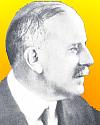 | Four geologists died on 28 Aug, each of a different era and in different parts of the world. Pictured at the left, William Bowie (1872-1940, geodesist who investigated isostasy); Sir T. W. Edgeworth David (1858-1934); Émile Haug (1861-1927, geologist known for his contributions to the theory of geosynclines); and William Smith (1769-1839, geologist who developed stratigraphy and also made a monumental study of a certain country). For each geologist, can you give their nationality or the country they studied? |
| Events | |
 | On 28 Aug 1963, the Evergreen Point road bridge connecting Seattle and Bellevue opened. What was the unusual construction type this bridge? |
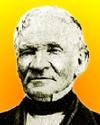 | On 28 Aug 1845, the first issue came out in the U.S. of a science magazine that is still being published under the same name. The first publisher was Rufus Porter (1792-1884), a versatile if eccentric Yankee, who was by turns a portrait-painter, schoolmaster, inventor and editor. What is the name of this magazine? |
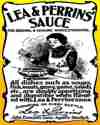 | On 28 Aug 1837, English pharmacists John Lea and William Perrins began the manufacture of a now world-famous condiment. What condiment? |
Fast answers for the previous newsletter for August 27: ammonia, directly from nitrogen and hydrogen • cyclotron • one penny • Venus fly-by • Pennsylvania.
 If you enjoy this newsletter, the website, or wish to offer encouragement or ideas, please send feedback by using your mail reader Reply button.
Your click on a Facebook, StumbleUpon, or other social button on the site webpages is also a welcome sign of appreciation. Thank you for using them.
© This newsletter is copyright 2020 by todayinsci.com. Please respect the Webmaster's wishes and do not put copies online of the Newsletter — or any Today in Science History webpage. (If you already have done so, please remove them. Thank you.) Offline use in education is encouraged such as a printout on a bulletin board, or projected for classroom viewing. Online, descriptive links to our pages are welcomed, as these will provide a reader with the most recent revisions, additions and/or corrections of a webpage. For any other copyright questions, please contact the Webmaster by using your mail reader Reply button.
--
If you do not want to receive any more newsletters, Unsubscribe
To update your preferences and to unsubscribe visit this link


Friday
Newsletter for Friday 27 August.
TODAY IN SCIENCE HISTORY
NEWSLETTER • 27 AUGUST
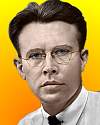
On 27 Aug 1901, when Ernest Lawrence died (too soon, at age 57), he left a scientific world much different than the one in which he began. He changed it. He was certainly one of the greatest of America's early 20th century physicists. His name is on a U.S. National Laboratory to memorialize his achievements in the building of the first atom-smashers. [BOOK INFO] who reveals more than you probably knew before about this many-sided genius. His important discoveries included creating technetium, the first artifically produced element. But he also pursued practical applications for the atom-smashers, too, such as making radioactive phosphorus and other isotopes for medical use, including radioactive iodine for the first medical treatment of hyperthyroid conditions. Further, he was the first to use neutron beams in treating cancer. In other fields, he invented the first atomic clock. But his greatest work was the development of the particle accelrators, for which he received the Nobel Prize in Physics. Definitely a scientist worth knowing more about.
It is available from Amazon, typically about (As of earlier time of writing - subject to change.)
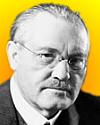 | The disaster was caused neither by carelessness nor human failure. Unknown natural factors that we are still unable to explain today have made a mockery of all our efforts. The very substance intended to provide food and life to millions of our countrymen and which we have produced and supplied for years has suddenly become a cruel enemy for reasons we are as yet unable to fathom. It has reduced our site to rubble. From the memorial service for the hundreds of people killed by the explosion of the ammonia fertilizer factory at Oppau, Germany. At the time, the explosive nature of ammonium nitrate was not understood. — Carl Bosch, German industrial chemist (born 27 Aug 1874). |
| | The day when the scientist, no matter how devoted, may make significant progress alone and without material help is past. This fact is most self-evident in our work. Instead of an attic with a few test tubes, bits of wire and odds and ends, the attack on the atomic nucleus has required the development and construction of great instruments on an engineering scale. — Ernest Orlando Lawrence, American physicist (died 27 Aug 1958). |
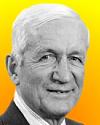 | Although I am primarily an experimental physicist, theoretical physics is my hobby. — Norman Ramsey, American physicist (born 27 Aug 1915). |
| Before you look at today's web page, see if you can answer some of these questions about the events that happened on this day. Some of the names are very familiar. Others will likely stump you. Tickle your curiosity with these questions, then check your answers on today's web page. | |
| Births | |
| | Carl Bosch, born 27 Aug 1874 was a German industrial chemist who developed the Haber-Bosch process for an important high-pressure synthesis. He was awarded the 1931 Nobel Prize for Chemistry What is the product of the Haber-Bosch process? From what substances is it made? |
| Deaths | |
| | Ernest Orlando Lawrence (1901-1958) was an American physicist, winner of the 1939 Nobel Prize for Physics for his invention of the first particle accelerator to achieve high energies. What was this first high energy particle accelerator called? |
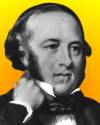 | Sir Rowland Hill (1795-1879) was an English educator and inventor who originated the modern postal service. He introduced the first adhesive postage stamp in 1840. What was the price of the first stamp? |
| Events | |
 | On 27 Aug 1962, the United States launched the Mariner 2 space probe. Which planet was mission of this probe? |
 | On 27 Aug 1859, Colonel Edwin L. Drake drilled the first successful oil well in the United States. The drilling had reached 69 feet, 6 inches when a dark film floating on the water below the derrick floor was noticed. In which state was this oil well drilled? |
Fast answers for the previous newsletter for August 26: polio • Montgolfier • During the French Revolution, for his involvement with tax-collecting, he was guillotined. • Charles Lindbergh • Antony van Leeuwenhoek • Niagara Falls • Krakatoa, or Krakatau (in Indonesian).
If you enjoy this newsletter, the website, or wish to offer encouragement or ideas, please send feedback by using your mail reader Reply button. Your click on a Facebook, StumbleUpon, or other social button on the site webpages is also a welcome sign of appreciation. Thank you for using them.
© This newsletter is copyright 2020 by todayinsci.com. Please respect the Webmaster's wishes and do not put copies online of the Newsletter — or any Today in Science History webpage. (If you already have done so, please remove them. Thank you.) Offline use in education is encouraged such as a printout on a bulletin board, or projected for classroom viewing. Online, descriptive links to our pages are welcomed, as these will provide a reader with the most recent revisions, additions and/or corrections of a webpage. For any other copyright questions, please contact the Webmaster by using your mail reader Reply button.
--
If you do not want to receive any more newsletters, Unsubscribe
To update your preferences and to unsubscribe visit this link


Thursday
Newsletter for Thursday 26 August.
TODAY IN SCIENCE HISTORY
NEWSLETTER • 26 AUGUST
There are two McCormicks who made significant contributions to improving the methods of agriculture. On 26 Aug 1784, Stephen McCormick was born, the American inventor and manufacturer of a cast iron plow with detachable components. He introduced the concept of replaceable and standardized parts. He was the cousin of Cyrus McCormick who invented the famous reaper.
For a quick biography, read this article on Stephen McCormick, and cast your mind back to the conditions of farming, and the difficulty of taming arable land at the beginning of the nineteenth century. When plows attempted to turn over the sod, the ground fought back and damaged the plows. By the time McCormick got involved with addressing the problem, the wooden plows of earlier times had been replaced by cast iron. But there was still a problem to be solved regarding maintenace.
Making parts replaceable through standardization — that was McCormick's important innovation. Eventually thousands of his horsedrawn plows were being manufactured.

Antoine Lavoisier, born 26 Aug 1743 is a giant in the history of chemistry. He revolutionized the field and created the first modern table of chemical elements. Yet despite his remarkable importance to modern chemistry, Lavoisier's scientific work was more a hobby than a profession! In fact, because he made his living during the day, his scientific work was relegated to early morning and after-dinner hours! If that was not your perception of such a productive scientist, you may want to read a biography of this remarkable man. Today's book pick is: Lavoisier: Chemist, Biologist, Economist (Chemical Sciences in Society), by Jean-Pierre Poirier who filled the need to write a complete biography of Lavoisier, with the goal of establishing the links between the multidisciplinary activities of his brilliant mind and grasping the logic of his life and death. The author understands chemistry as a research and development director in the R&D in the pharmaceutical industry. He he is a member of the Comite Lavoisier at the Paris Academy of Sciences.
It is available from Amazon, typically about New from $30.06. Used from $7.36. (As of earlier time of writing - subject to change.)
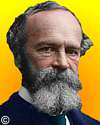 | The self-same atoms which, chaotically dispersed, made the nebula, now, jammed and temporarily caught in peculiar positions, form our brains; and the “evolution” of brains, if understood, would be simply the account of how the atoms came to be so caught and jammed. — William James, American psychologist and philosopher (died 26 Aug 1910). |
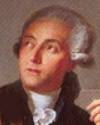 | The impossibility of separating the nomenclature of a science from the science itself, is owing to this, that every branch of physical science must consist of three things; the series of facts which are the objects of the science, the ideas which represent these facts, and the words by which these ideas are expressed. Like three impressions of the same seal, the word ought to produce the idea, and the idea to be a picture of the fact. — Antoine-Laurent Lavoisier, French chemist (born 26 Aug 1743). |
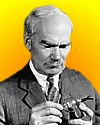 | Tiny ferryboats they were, each laden with its little electric charge, unloading their etheric cargo at the opposite electrode and retracing their journeyings, or caught by a cohesive force, building up little bridges, or trees with quaint and beautiful patterns. Describing the flow of electrons between electrodes in a vacuum tube. — Lee De Forest, American inventor (born 26 Aug 1873). |
| Before you look at today's web page, see if you can answer some of these questions about the events that happened on this day. Some of the names are very familiar. Others will likely stump you. Tickle your curiosity with these questions, then check your answers on today's web page. | |
| Births | |
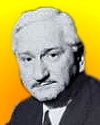 | Albert Bruce Sabin, born 26 Aug 1906 was a Polish-American physician and microbiologist best known for developing an oral vaccine (1955), which was administered to millions of children in Europe, Africa, and the Americas beginning in the late 1950s. For what disease was his vaccine developed? |
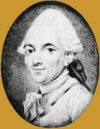 | Joseph-Michel, one of two brothers who were pioneers in ballooning, was born 26 Aug 1740. In the span of one year after releasing their test balloon, the brothers had enabled the first manned balloon flight in the world. What is the brothers' family name? |
| | On 26 Aug 1743, Antoine-Laurent Lavoisier was born a French scientist who is known as the “father of modern chemistry.” In 1778, he found that air consists of a mixture of two gases which he called oxygen and nitrogen. Lavoisier discovered the law of conservation of mass, and he also devised the modern method of naming compounds, which replaced the older nonsystematic method. What were the circumstances of his death? |
| Deaths | |
 | An aviator who was a WWI pilot (1902-1974) was the first to fly solo nonstop across the Atlantic Ocean, from New York to Paris, on 20-21 May 1927. Can you name this person? |
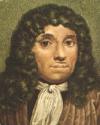 | A Dutch scientist, microscopist and zoologist (1632-1723) was the first to observe bacteria and protozoa. His researches on lower animals refuted the doctrine of spontaneous generation, and his observations helped lay the foundations for the sciences of bacteriology and protozoology. Can you name this man? |
| Events | |
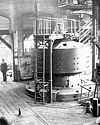 | On 26 Aug 1895, electricity was first transmitted commercially from the first large-scale utilization of hydroelectricity in the U.S. What was the source of this water power? |
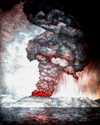 | On 26 Aug until 28 Aug in 1883, the eruption of an island volcano in the Dutch Indies produced violent explosions that destroyed two thirds of the island. It produced tidal waves as far away as Cape Horn, and possibly England. An estimated 36,000 died. What is the name of this volcano? In which country? |
Fast answers for the previous newsletter for August 25: Frederick Chapman Robbins = virologist; Sir Hans Adolf Krebs = Krebs cycle of the oxidation process within the cell; Theodor Kocher = thyroid gland • Antoine-Henri Becquerel • Uranus • Michael Faraday • thousands • decade of 1973.
If you enjoy this newsletter, the website, or wish to offer encouragement or ideas, please send feedback by using your mail reader Reply button. Your click on a Facebook, StumbleUpon, or other social button on the site webpages is also a welcome sign of appreciation. Thank you for using them.
© This newsletter is copyright 2020 by todayinsci.com. Please respect the Webmaster's wishes and do not put copies online of the Newsletter — or any Today in Science History webpage. (If you already have done so, please remove them. Thank you.) Offline use in education is encouraged such as a printout on a bulletin board, or projected for classroom viewing. Online, descriptive links to our pages are welcomed, as these will provide a reader with the most recent revisions, additions and/or corrections of a webpage. For any other copyright questions, please contact the Webmaster by using your mail reader Reply button.
--
If you do not want to receive any more newsletters, Unsubscribe
To update your preferences and to unsubscribe visit this link


Social Profiles


-
Why eels were once the perfect payment for land...
-
Last week, workers installing new gas pipes in the town of Chilca, 40 miles south of Lima, Peru, discovered a group of funerary bundles con...
-
 In 1896–1897 the forces of the Niger Coast Protectorate fought with the remnants of the Edo Empire. Following the defeat of an unsuccessful...